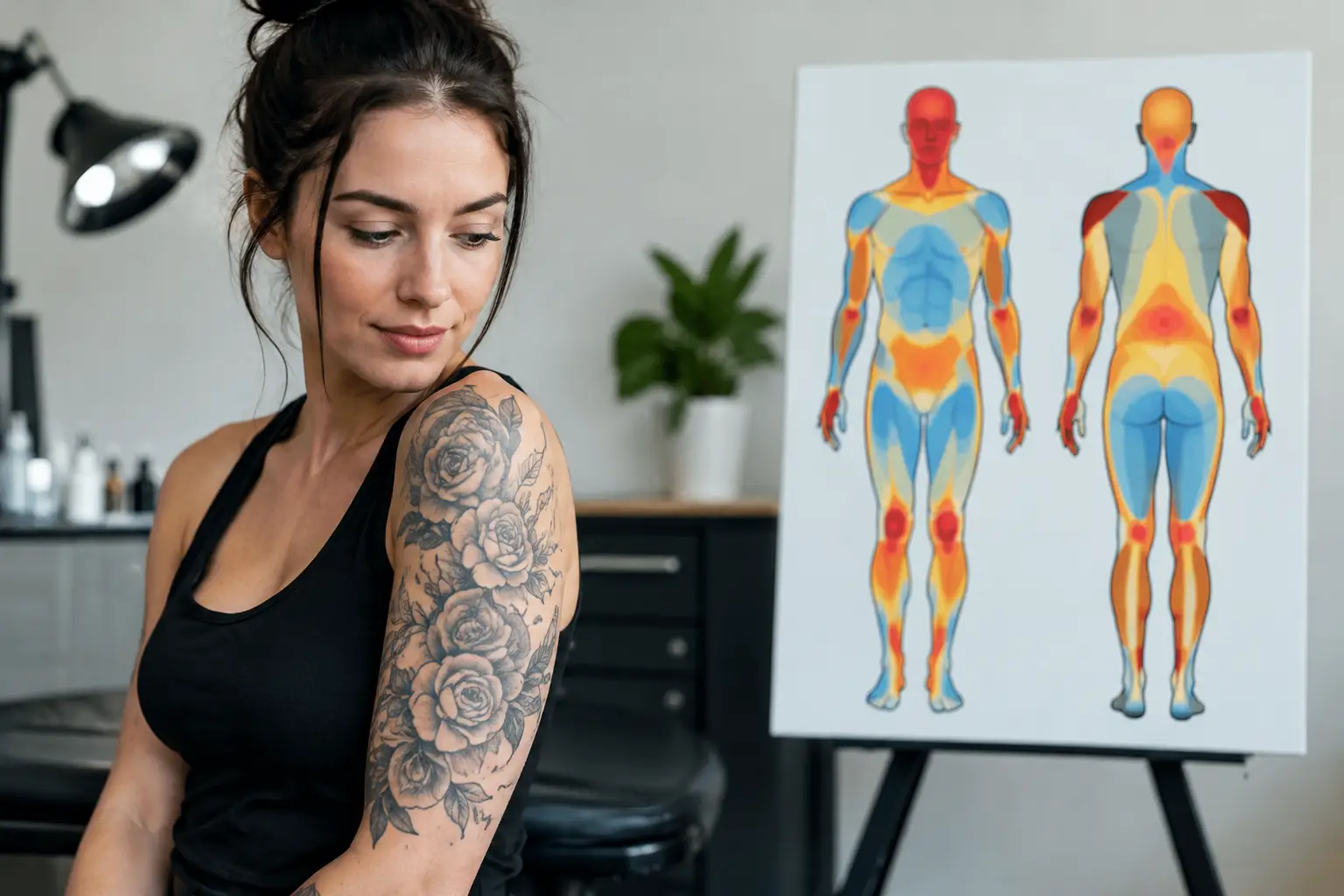
That tiny fine-line tattoo on the ribs might look effortless in a photo. Getting it? Different story. A tattoo pain chart can help you choose a placement with your eyes open, but it is not a crystal ball. Pain is personal, placement matters, and the right artist can make the whole experience feel far more manageable than the horror stories suggest.
Whether this is your first piece or you are adding to a growing collection, the goal is not to prove how tough you are. The goal is to get art you love, sit smart, and leave feeling good about the decision. No drama. Just badass art and a solid plan.
Tattoo Pain Chart: What It Can and Cannot Tell You
Most tattoo pain charts rate body areas from low to high based on a few real factors: how close the skin sits to bone, how many nerve endings are nearby, how thin or sensitive the skin is, and whether the area gets a lot of daily friction. That makes the chart useful for comparing placements. It does not tell you exactly what your tattoo will feel like.
Your pain tolerance, sleep, stress level, hydration, menstrual cycle, medication, tattoo size, and the style of the piece all change the equation. A small traditional flash tattoo on the outer arm may be quick and spicy. A large black-and-gray thigh piece may be easier moment to moment but harder by hour four. Different strokes for different folks.
Think of a pain chart as a placement guide, not a ranking contest. The same spot can feel completely different depending on whether your artist is outlining, shading, packing color, or coming back over an already irritated area.
The Usual Tattoo Pain Zones
Lower-pain placements
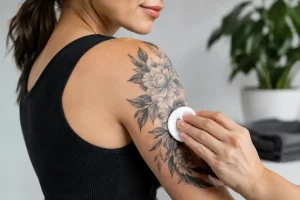
The outer upper arm, outer forearm, thigh, calf, and upper back are often considered friendlier territory. These areas generally have more muscle or padding, fewer exposed bony edges, and enough room for an artist to work efficiently. That does not mean painless. A tattoo machine still creates a repeating scratch-and-burn sensation, especially during linework. But these placements are often a strong call for a first tattoo or a longer session.
The outer arm is popular for good reason. It offers a comfortable canvas for everything from bold neo-traditional designs to delicate florals, and it is easy to protect while healing. The thigh is another solid option if you want a larger custom concept without jumping straight into the deep end.
Moderate-pain placements
Shoulders, the inner forearm, the front of the thigh, the chest, and parts of the lower leg often land in the middle. These can be totally manageable, but the sensation may get sharper as the artist moves toward thinner skin, muscle attachments, or bony areas.
The inner forearm is a classic example. It is a popular, visible spot and usually workable for most people, but it tends to feel more sensitive than the outer forearm. The chest varies a lot too. More muscular areas may be easier than the sternum, while detailed work near the collarbone can make your whole nervous system sit up and pay attention.
High-pain placements
Ribs, sternum, spine, knees, elbows, ankles, feet, hands, and the inner bicep have reputations for a reason. Bone, vibration, thin skin, and concentrated nerves can make these placements feel more intense. Areas that bend or move constantly can also become tiring to hold in position.
Rib tattoos are not automatically unbearable, but breathing changes the canvas as your artist works. That means you will need to stay still and keep your breathing steady. Elbows and knees can be rough because the skin is thin and the texture changes across the joint. Feet and ankles have limited padding and can be especially tender during both tattooing and healing.
The toughest placements for many people
The armpit, nipple area, groin, genitals, palms, fingers, toes, and the head or face commonly sit at the far end of a tattoo pain chart. These areas can be highly sensitive, difficult to position, quick to swell, or challenging to heal because of movement and friction.
That does not mean these placements are off-limits. It means they deserve extra thought. A finger tattoo may be short, but it can hurt sharply and may need touch-ups because hands take constant wear. A large rib or sternum project may be worth splitting into multiple sessions. Smart choices beat white-knuckling it for the story.
Why the Same Tattoo Can Feel Different on Different Days
Placement is only one piece of the pain puzzle. Your body shows up to the appointment with you.
Sleep matters more than people want to admit. Walking in exhausted can make a manageable tattoo feel brutal. So can arriving hungry, dehydrated, hungover, or already stressed out. Eat a real meal beforehand, drink water, and skip alcohol. Alcohol can increase bleeding and is a bad move before getting tattooed.
Session length matters too. The first 20 minutes may feel surprisingly easy, then your body starts reacting to the repeated sensation. Adrenaline drops, the area gets tender, and the last stretch can feel louder than the first. That is normal. It is also why a good artist will be honest about whether your idea makes sense in one sitting or should be broken into sessions.
Style plays a role. Fine-line work can feel sharp and scratchy. Heavy blackwork and color packing can feel more abrasive because the artist makes repeated passes to saturate the skin. A complex custom tattoo may include both. The best question is not, “What style hurts least?” It is, “What style fits the art I actually want?” A tattoo lasts longer than the appointment.
How to Make Your Tattoo Appointment Easier
You cannot erase tattoo pain, but you can stop making it worse. Come in rested, hydrated, and fed. Wear clothing that gives your artist clean access to the area without making you feel exposed or uncomfortable. Bring a layer if you get cold, because long appointments can make that happen.
Tell your artist if you are nervous, lightheaded, prone to fainting, or taking any medication that could affect the appointment. Clear communication is part of professional tattooing, not a buzzkill. Your artist can help with positioning, pacing, and breaks when needed.
During the tattoo, do not hold your breath or tense every muscle like you are preparing for impact. Slow breathing gives your body something useful to do. Music, conversation, or a simple focal point can help, but do not force yourself to talk if you need quiet. You are allowed to tap out for a bathroom break, water, or a quick reset.
Ask about numbing options before your appointment rather than arriving with a random cream already on your skin. Products and techniques can affect how skin behaves, and the right approach depends on the artist, placement, and project. Never surprise your artist with something applied at home.
Pain Is Not the Only Placement Trade-Off
The least painful spot is not always the best spot for the design. Hands fade faster. Feet deal with shoes and friction. Joints move. The ribs and torso change with breath and body movement. Tiny detail on a high-wear area may not stay crisp forever, while a larger design on the thigh or upper arm gives your artist room to make the artwork hit hard for years.
Healing deserves equal attention. A calf tattoo can be comfortable during the session but annoying if you are on your feet all day. A waistband tattoo may rub against clothing. A hand tattoo can be hard to keep away from water and daily grime. Your lifestyle should be part of the placement conversation, right alongside the tattoo pain chart.
At Apocalypse Girl Tattoo, the right artist fit and a straightforward consultation can help turn all of those variables into a plan that makes sense for your body and your idea. Great tattooing is not just about surviving the needle. It is about respecting the art, the skin, and the person wearing it.
Quick Questions About Tattoo Pain
Does a tattoo hurt more than a piercing?
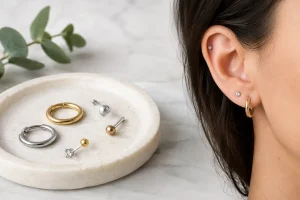
They are different sensations. A piercing is usually a fast, intense pinch with pressure afterward. A tattoo is a repeated sensation that lasts longer. Someone who handles piercings easily may still find a long tattoo session challenging, and the reverse can be true.
What is the least painful place for a first tattoo?
For many people, the outer upper arm, outer forearm, thigh, calf, or upper back are comfortable starting points. Choose a place that works for the design and is realistic for your work, clothing, sun exposure, and healing routine.
Can I take pain medicine before a tattoo?
Do not guess. Some medications can affect bleeding or how you feel during the appointment. Check with a qualified medical professional about your specific health needs, and tell your tattoo artist about anything relevant before the session.
Pick the placement that makes the artwork feel right on your body, then prepare like you mean it. A few hours of discomfort is temporary. Wearing a piece of art that feels like you for years? That is the good part.