A fresh piercing has enough on its plate. It does not need mystery metal, a flaky coating, or a cheap clasp turning your new look into an angry red situation. The right piercing jewelry materials can make healing calmer, daily wear more comfortable, and your style feel like you. The wrong stuff can cause irritation that looks a lot like infection – and nobody wants that drama.
At Apocalypse Girl Tattoo, we’re into self-expression, good vibes, and doing things safely. Here’s what to know before you pick out that nostril stud, stacked ear setup, navel bar, or statement septum ring.
Why Piercing Jewelry Materials Matter
Jewelry is not just decoration when a piercing is new. It is sitting in a healing channel through your body, sometimes for months. Material quality, surface finish, fit, and design all affect how that channel settles in.
A safe material should be compatible with the body, smooth enough not to create unnecessary friction, and free from mystery ingredients. If you have sensitive skin or a known nickel allergy, those details matter even more. A piercing can also react to pressure, movement, and poor sizing, so even excellent jewelry needs to be fitted correctly by a professional.
One important reality check: “surgical steel” is not a magic phrase. Neither is “hypoallergenic.” Those labels can be vague, especially when you do not know the manufacturer or the exact alloy. Ask what the jewelry is made from, whether it is appropriate for a healing piercing, and whether your piercer can verify its quality.
The Best Piercing Jewelry Materials for Healing
Implant-grade titanium
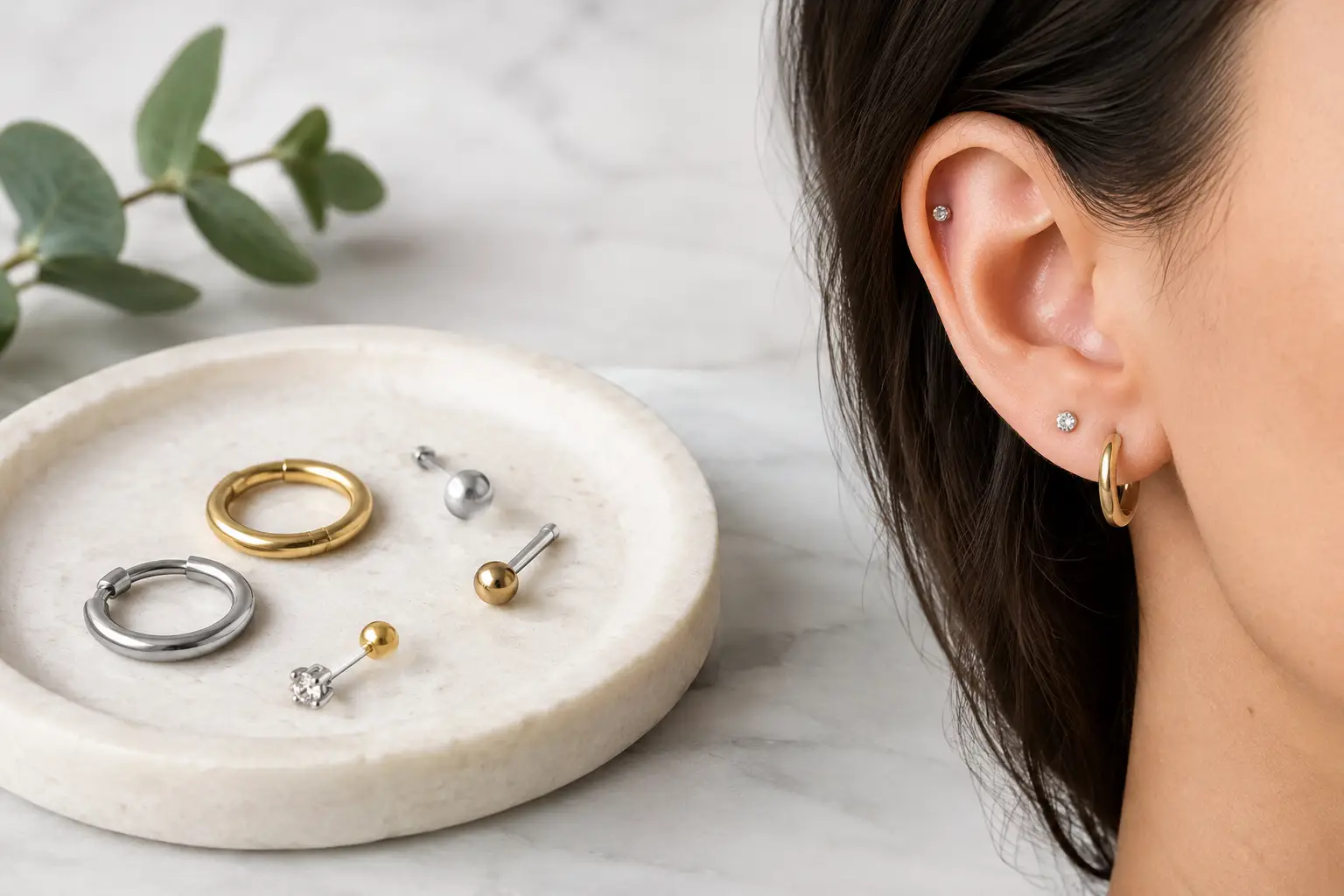
Titanium is the heavyweight favorite for fresh piercings, and for good reason. Implant-grade titanium is lightweight, corrosion-resistant, and typically nickel-free. It is a solid choice for people with nickel sensitivity, for long healing piercings like cartilage or navel placements, and for anyone who simply wants to start with a reliable option.
It can also be anodized into colors without painting or plating it. That means you can get a pop of purple, gold, blue, or green without relying on a coating that may wear away. Just remember that anodized titanium is color-treated metal, not a painted finish, and it should still come from a reputable jewelry maker.
Solid 14k or 18k gold
Gold can absolutely be safe for piercings, but the details are everything. Look for solid 14k or 18k gold from a trusted body jewelry manufacturer. Solid means solid – not gold-plated, gold-filled, or mystery “gold tone.”
Fourteen-karat gold is often a practical sweet spot because it has more alloy metal for durability than 18k gold. Eighteen-karat gold has a richer color but is softer. Neither is automatically better for every placement. Your anatomy, lifestyle, and jewelry design all matter.
Skip gold jewelry with cadmium, nickel-heavy alloys, rough solder points, or low-karat content for a healing piercing. Vintage jewelry may look killer, but it is not automatically body-safe just because it is real gold.
Niobium
Niobium is another excellent option for sensitive skin. Like titanium, it is nickel-free and can be anodized into bright colors. It is a little heavier and softer than titanium, which can make it especially nice for certain rings and decorative pieces once a piercing is established.
It is less common than titanium, but it deserves more hype. If you want color and have a history of metal sensitivity, ask your piercer whether niobium is right for your placement.
What About Surgical Steel?
High-quality implant-grade steel can be suitable for some piercings and is widely used in professional studios. It is durable, polished, and often more affordable than gold. The catch is that steel usually contains nickel.
For people without nickel sensitivity, verified implant-grade steel may be a perfectly reasonable choice. For those who know their skin gets irritated by cheap earrings, belt buckles, watch bands, or certain rings, titanium is usually the safer bet. Do not gamble with a fresh piercing just because the jewelry was cheaper or came in more styles.
The grade matters, too. “Stainless steel” covers a huge range of materials. A reputable piercer should be able to tell you exactly what they are installing, not just wave a hand and call it surgical.
Materials to Avoid in Fresh Piercings
Some materials are fine as occasional fashion jewelry after a piercing is fully healed. That does not make them a smart choice for a new piercing. Fresh piercings need quality, not shortcuts.
Avoid these in healing piercings:
- Acrylic, plastic, silicone, and resin, which can scratch, degrade, trap buildup, or harbor bacteria.
- Plated jewelry, because the outer layer can chip or wear down and expose whatever metal is underneath.
- Sterling silver, which can tarnish and may discolor skin or tissue.
- Cheap costume jewelry and unverified online multipacks with unknown metal content.
- Organic materials such as wood, bone, horn, and stone, which are porous or difficult to sterilize for initial wear.
Glass is the exception worth knowing. High-quality borosilicate or fused quartz glass can be body-safe and useful in specific situations, including some stretching journeys. It still needs to be smooth, correctly sized, and chosen with professional guidance.
Finish, Fit, and Threading Are Part of the Material Conversation
The material is only one part of the equation. A beautifully made titanium piece can still cause trouble if it is too short, too tight, too heavy, or has sharp edges. Swelling happens, especially in cartilage, lips, and nostrils. Your initial jewelry should leave enough room for that swelling without constantly catching on clothing, hair, or your pillow.
Surface finish matters, too. Quality body jewelry is polished to a mirror-smooth finish, reducing friction against healing tissue. Decorative texture is cool on the visible end of the piece, but the wearable surface should stay smooth.
Threading deserves a quick mention. Internally threaded jewelry places the screw threads on the removable end, not on the post that passes through the piercing. Threadless jewelry uses a smooth pin-and-post system. Both are generally better choices than externally threaded jewelry, where rough threads can scrape through a fresh channel during insertion or removal.
Choose for the Placement, Not Just the Look
Different piercings live different lives. A helix piercing gets knocked by hair, headphones, and sleep. A navel piercing deals with waistbands and movement. A tongue piercing sees heat, food, and plenty of accidental biting. Your first piece should work with the placement before it works the camera.
For example, a snug-fitting hoop might look perfect in a healed nostril, but a stud can be more practical while swelling settles. Heavy decorative ends may not be ideal for a fresh eyebrow or navel piercing. A professional piercer will assess your anatomy and recommend jewelry that gives you a clean heal without killing your aesthetic.
That does not mean you are stuck with boring jewelry. It means you start smart, then switch it up when your piercing is actually ready. Different strokes for different folks – and different jewelry for different healing stages.
How to Know When It’s Time to Change Jewelry
Do not use the calendar alone. Healing times are ranges, not finish lines, and a piercing can look healed on the outside while the inside is still fragile. Changing jewelry too early can cause tearing, swelling, irritation bumps, or a setback that keeps the piercing unhappy for weeks.
If your jewelry feels too tight, embeds into the skin, causes ongoing pressure, or becomes damaged, see a professional piercer instead of forcing a change at home. Downsizing is often needed after initial swelling goes down, particularly with cartilage piercings. That is a normal part of good aftercare, not a sign anything went wrong.
When you are ready for a style change, stick with verified body-safe materials and choose a size that fits your anatomy. A healed piercing deserves better than bargain-bin metal.
Your jewelry should make you feel badass, not make your body fight back. Start with quality, let your piercing heal on its own timeline, and ask a pro when something feels off. Good piercing work is equal parts style, skill, and taking care of the body that wears it.