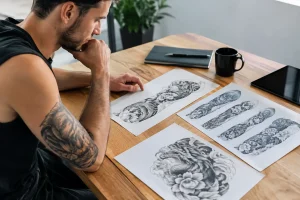
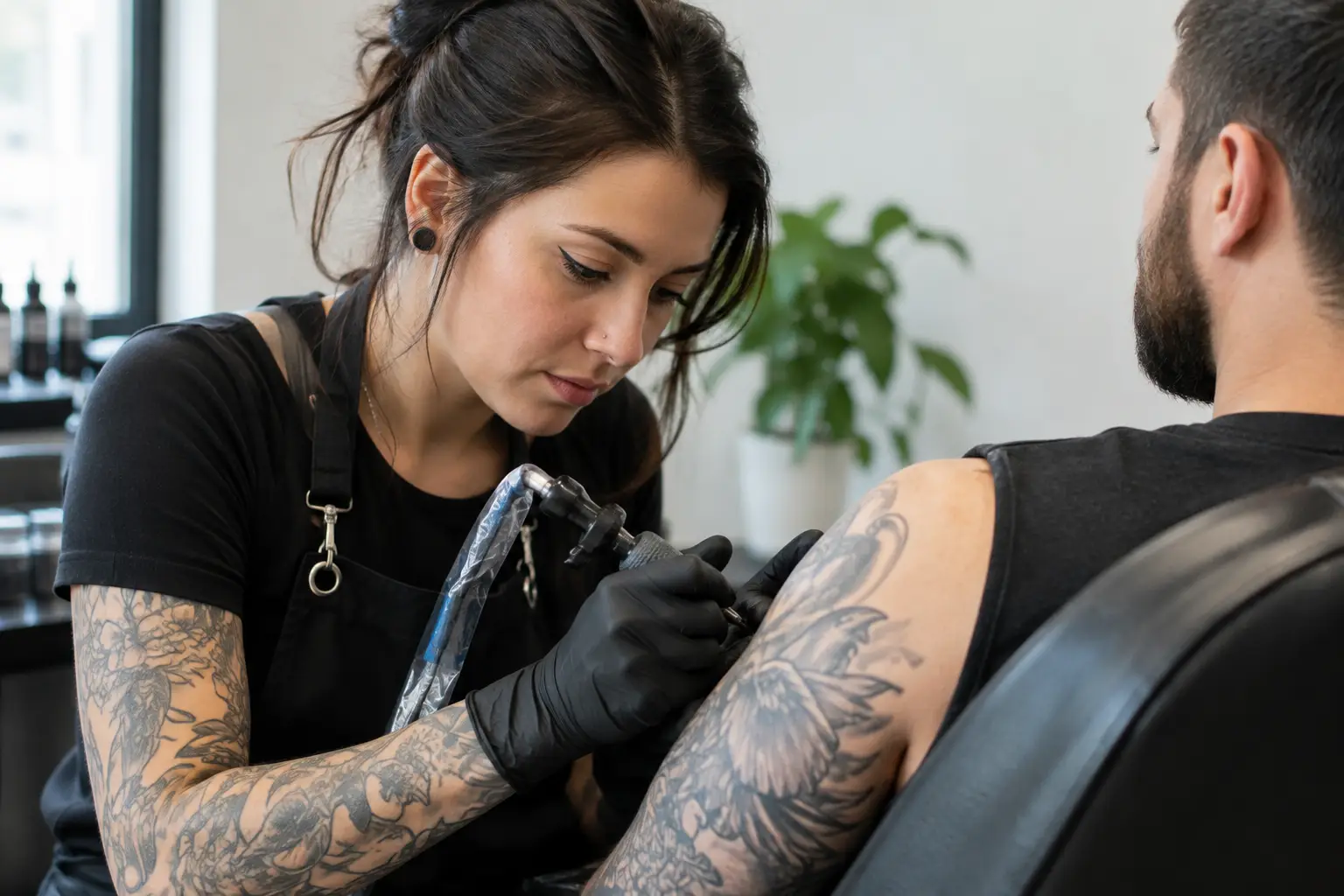
That saved folder full of references is not a tattoo design yet. It is a starting point. A custom tattoo artist Raleigh clients trust should help turn the feeling behind those images into something original, wearable, and built for your body – not just copy a picture off a screen.
Whether you are planning your first piece, building a sleeve, honoring somebody you love, or getting a weird little flash tattoo because it makes you laugh, artist fit matters. Good Ink. Good Vibes. Good People. That is the energy worth looking for, but skill, cleanliness, and clear communication have to back it up.
What a Custom Tattoo Artist in Raleigh Should Do
Custom work is a collaboration. You bring the story, references, placement ideas, and honest answers about what you like. The artist brings the trained eye: composition, line weight, color choices, flow, and the experience to know what will still read well after years on your skin.
That last part is huge. A tiny, ultra-detailed scene may look incredible on a phone, but it may not age well at the size you want. Fine lines can be beautiful, but they need breathing room. A design with lots of micro-details may need a larger placement, a simpler approach, or both. A real professional will tell you that before the stencil goes on, even if the answer is not exactly what you hoped to hear.
Custom does not mean you have to arrive with a finished drawing. It means the final tattoo is made for you, instead of pulled from a wall or borrowed from somebody else’s body. Bring your ideas, not a demand for an exact copy of another artist’s work. The best result is inspired by your references and shaped into something that is unmistakably yours.
Start With Style, Not Just Subject Matter
Two artists can tattoo the same snake, flower, portrait, or horror character and create completely different pieces. Before you book, look beyond the subject and pay attention to the style of the work.
Traditional tattoos are bold, graphic, and made to hold up. They lean into strong outlines, intentional color, and instantly readable imagery. Neo-traditional takes that foundation and turns up the detail, dimension, and decorative flair. Fine-line work can feel softer, more delicate, and more minimal, but it demands a steady hand and smart design choices.
If your concept sits between styles, that is fine. Maybe you want a traditional dagger with fine-line botanicals, or a black-and-gray memorial piece with a pop of color. The trade-off is that not every artist should be asked to do every style. Find the person whose existing work already lives in the neighborhood of what you want.
Do not choose solely because an artist tattooed a similar subject once. Look for consistency across their portfolio. Are their lines clean? Is their shading smooth? Do healed tattoos still look crisp? Does their work fit different skin tones and body placements with confidence? Fresh tattoos show design and saturation. Healed work shows discipline.
Read the Portfolio Like a Collector
A tattoo portfolio should make you feel something, but it should also answer practical questions. Look closely at tattoos that are similar to your planned size and placement. A killer full back piece does not automatically prove that an artist is the best fit for a tiny wrist tattoo, and a beautiful delicate floral design does not automatically translate to a bold calf piece.
Notice whether the artist can make designs flow with the body. Arms curve, ribs move, knees bend, and shoulders are not flat canvases. Great tattoos respect that. A straight-on drawing can need major adjustments when it becomes permanent body art.
Also, check for original thinking. You want artwork that has personality, not the same social-media tattoo repeated with a few leaves swapped out. There is nothing wrong with coming in for a classic idea, but the execution should still have a point of view.
Reviews matter here, too. A stack of five-star reviews can tell you whether clients felt heard, respected, comfortable, and well cared for. Art gets you in the door. Professionalism is what makes you confident enough to come back.
The Consultation Should Feel Clear, Not Weird
A good consultation is not an interrogation, and it is not a sales pitch. It is where you talk through the concept, placement, size, budget, scheduling, and anything that could affect the final piece. You should be able to say, “I do not know exactly what I want,” without being made to feel clueless.
Be ready to explain why the tattoo matters to you, what visual elements you want included, and what you absolutely do not want. References help, especially when you can point out specific details: the linework in one image, the color palette in another, the overall mood in a third.
Be open when the artist recommends a change. They may suggest going bigger, moving the placement, simplifying an element, or splitting a large project into sessions. That is not somebody killing your vision. Often, it is somebody protecting it.
Price should be discussed without mystery. Custom tattoo pricing depends on size, placement, detail, color, artist experience, and session time. The cheapest option can become expensive fast if you need a cover-up later. Budget for quality, and never rush a permanent decision because you saw a deal that expires tonight.
Clean Shop, Calm Energy, Zero Guesswork
The right studio should feel welcoming without feeling casual about safety. You should see a clean work area, professional setup practices, fresh single-use needles and supplies, and artists who are happy to answer questions about sanitation. If a shop gets defensive when you ask, walk.
Comfort counts, especially for first-timers. Tattooing can be intense, but you should not have to deal with pressure, judgment, or weird macho-shop energy on top of it. No Drama. Just Badass Art. A respectful studio gives you space to ask about pain, take a break when needed, and speak up if something does not feel right.
At Apocalypse Girl Tattoo, the goal is a client-centered experience where different strokes truly are for different folks. With artists working across distinct styles, two Cary locations serving the Raleigh area, walk-in options, and more than 1,100 five-star Google reviews, clients can find talented people without the gatekeeping.
Plan for the Appointment Before You Sit Down
Show up rested, hydrated, and fed. Wear clothing that gives the artist easy access to the placement, and bring a layer if you tend to get cold. Skip alcohol and anything that can leave you dehydrated or make you bleed more than usual. If you take medications or have a health concern that could affect tattooing, talk to a qualified medical professional and be upfront with your artist.
For longer sessions, bring water, a snack, headphones, or something small to help you stay comfortable. Ask your artist what is welcome in their station before you arrive. Do not bring an entire crew. A packed room can distract the artist and turn your appointment into a circus.
Aftercare is part of the tattoo, not an optional extra. Your artist should give you clear instructions for cleaning, moisturizing, protecting the piece from sun, and avoiding pools or soaking while it heals. Follow those instructions, even when the tattoo starts itching and your brain says one little scratch will not hurt. It will.
Make the Choice With Your Gut and Your Eyes
The right artist is not always the one with the earliest opening or the lowest quote. It is the person whose work makes sense for your idea, whose communication feels solid, and whose studio gives you confidence from the first conversation.
Bring your references. Bring your questions. Bring the real story behind the tattoo. Then give a skilled artist enough room to make it hit harder than the image you started with.